Resources
Books don't disappear quietly. They're challenged in school board meetings, pulled from library shelves after a single complaint, and removed from classrooms by educators afraid of losing their jobs. The data below shows the scale of what's happening, who is driving it, which states are most affected, and whose stories are being erased. We put this here because understanding the problem is the first step to fighting it.
Banned books
Popular banned/challenged books to read:
-
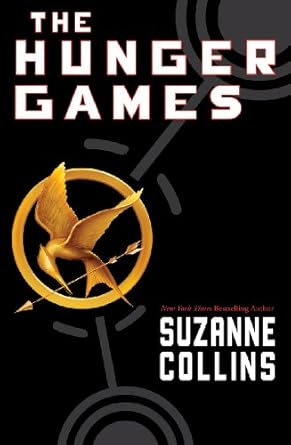
![Hunger Games by Suzanne Collins]()
Hunger Games by Suzanne Collins
-
![They Both Die at the End by Adam Silvera]()
They Both Die at the End by Adam Silvera
-
![The Giver by Lois Lowry]()
The Giver by Lois Lowry
-
![The Handmaid’s Tale by Margaret Atwood]()
The Handmaid’s Tale by Margaret Atwood
-
![The Great Gatsby by F. Scott Fitzgerald]()
The Great Gatsby by F. Scott Fitzgerald
-
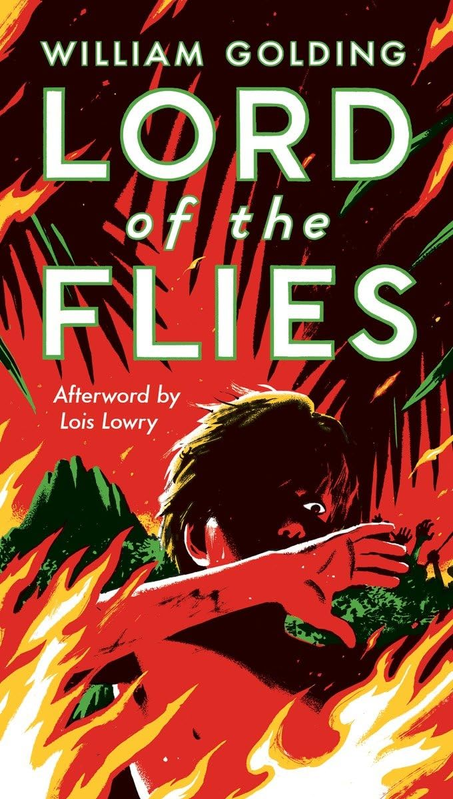
![The Lord of the Flies by William Golding]()
The Lord of the Flies by William Golding
-
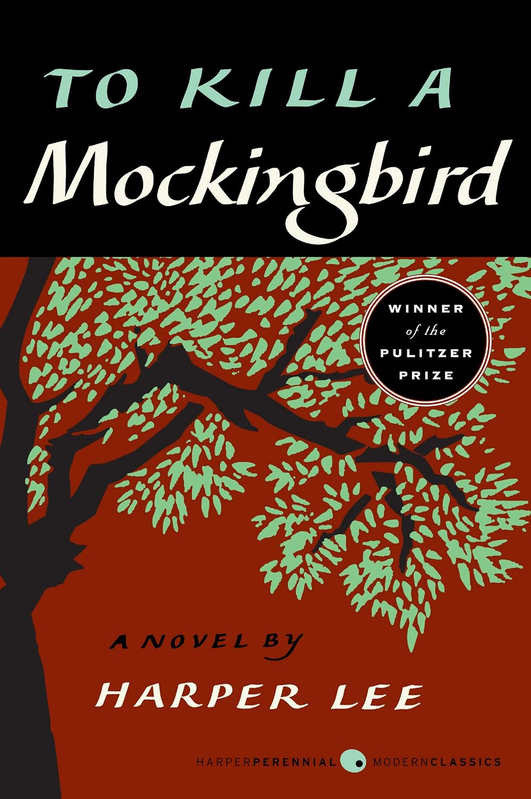
![To Kill a Mockingbird by Harper Lee]()
To Kill a Mockingbird by Harper Lee
-
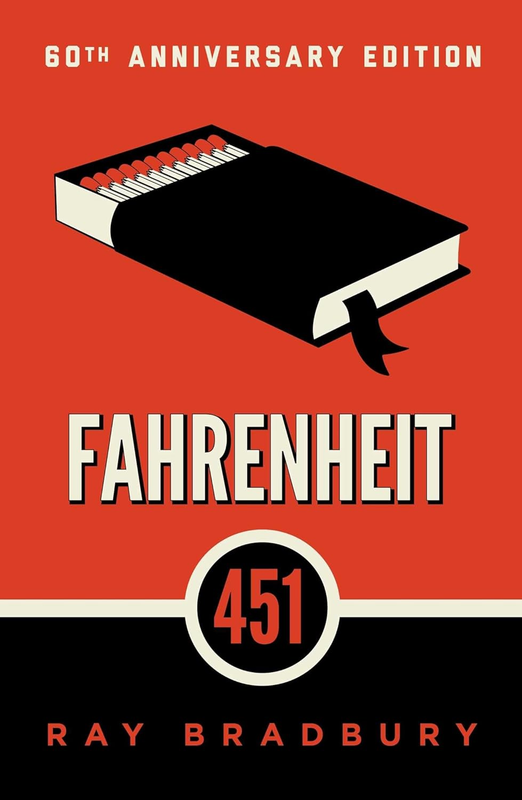
![Fahrenheit 451 by Ray Bradbury]()
Fahrenheit 451 by Ray Bradbury
-
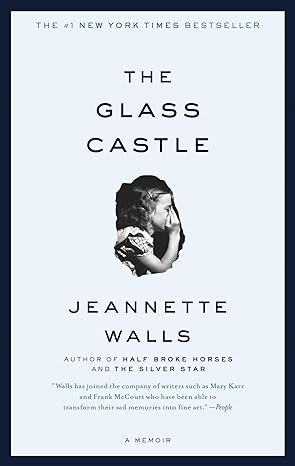
![The Glass Castle by Jeannette Walls]()
The Glass Castle by Jeannette Walls
-
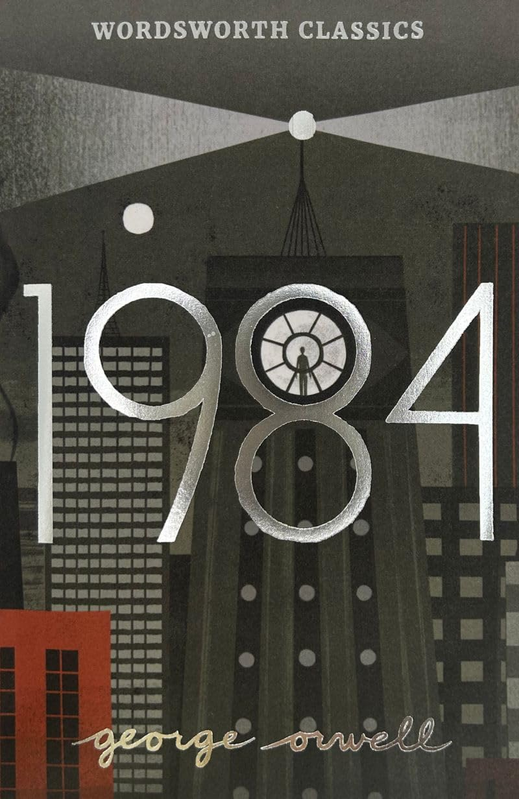
![1984 by George Orwell]()
1984 by George Orwell
-
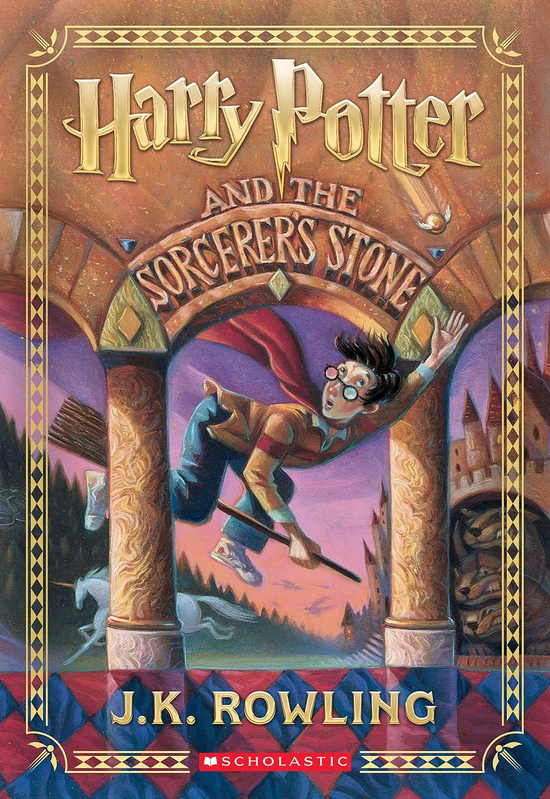
![Harry Potter and the Sorcerer's Stone by J.K. Rowling]()
Harry Potter and the Sorcerer's Stone by J.K. Rowling
-
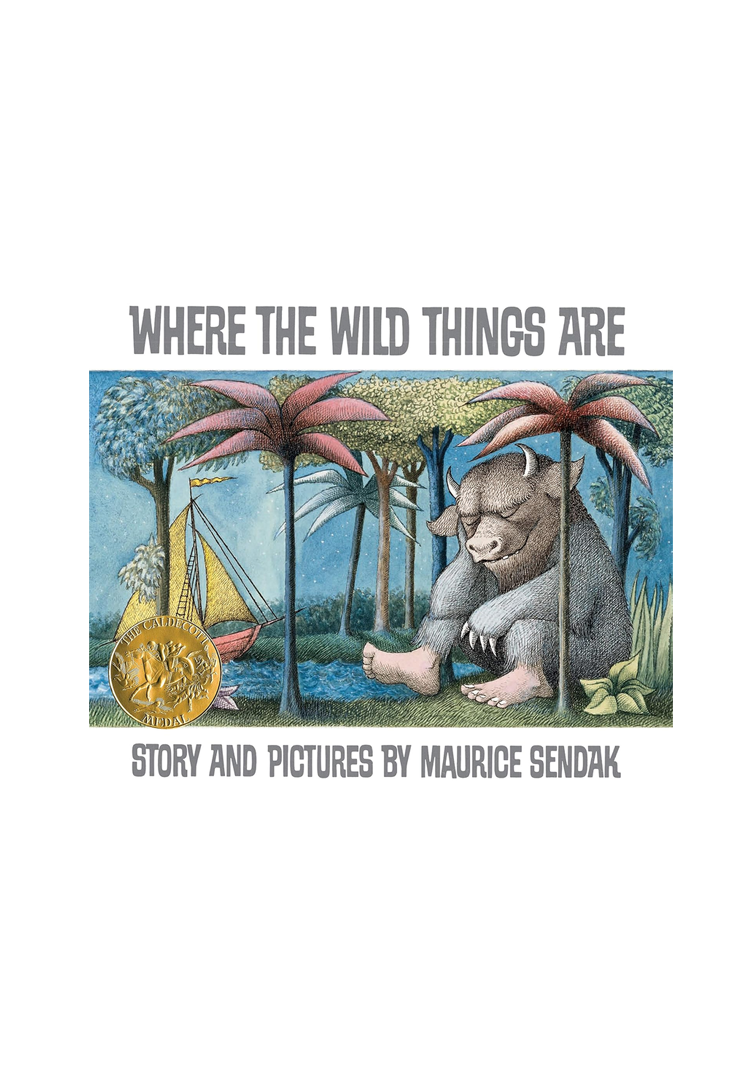
![Where the Wild Things Are by Maurice Sendak]()
Where the Wild Things Are by Maurice Sendak
-
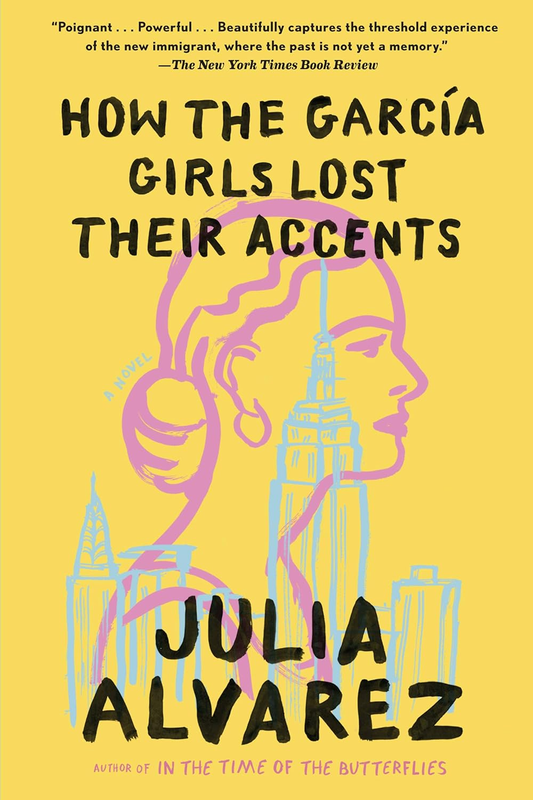
![How the Garcia Girls Lost Their Accents by Julia Alvarez]()
How the Garcia Girls Lost Their Accents by Julia Alvarez
-
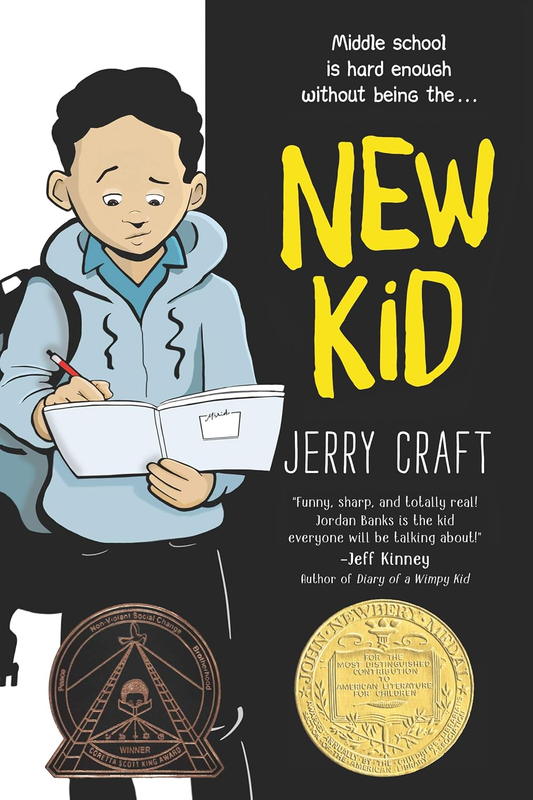
![New Kid by Jerry Craft]()
New Kid by Jerry Craft
-
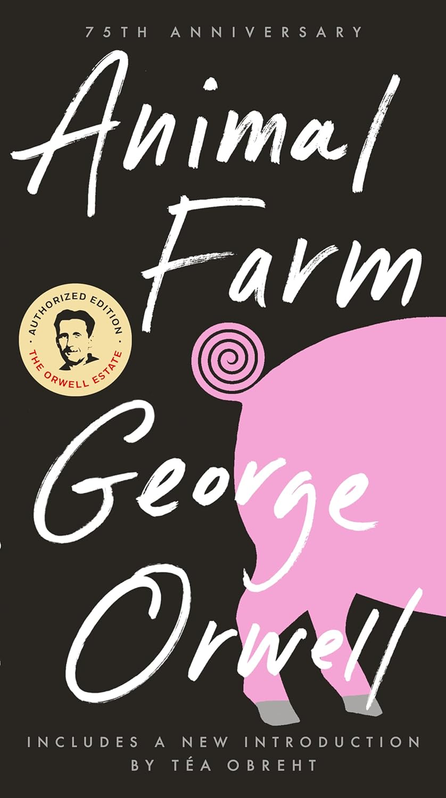
![Animal Farm by George Orwell]()
Animal Farm by George Orwell
-
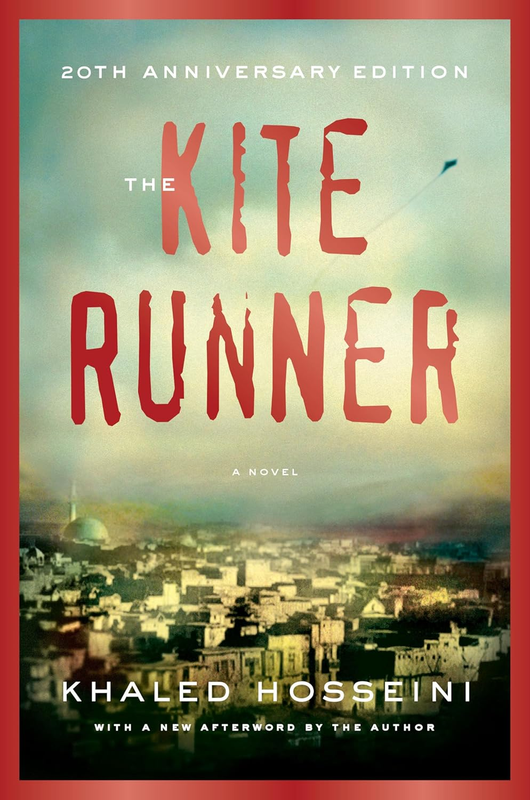
![The Kite Runner by Khaled Hosseini]()
The Kite Runner by Khaled Hosseini
2024 Book ban data
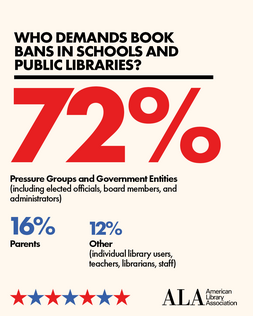
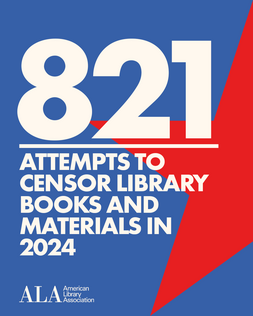
Most book challenges don't come from the broader community — they come from a small number of organized groups with national reach. This matters because it means local students and educators are often responding to pressure that didn't originate locally.
Challenges have risen sharply year over year — not slowed down. The trend line is why student-led organizations like ours exist: the people closest to these books are the ones who need to be loudest about protecting them.
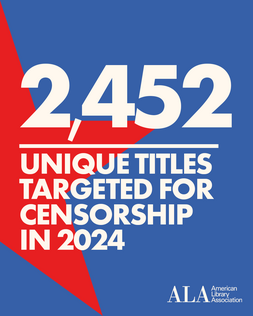
The most targeted books share a pattern: they feature characters and stories that have historically been underrepresented or excluded. When these titles disappear, specific communities lose the ability to see themselves in school libraries.
States at risk
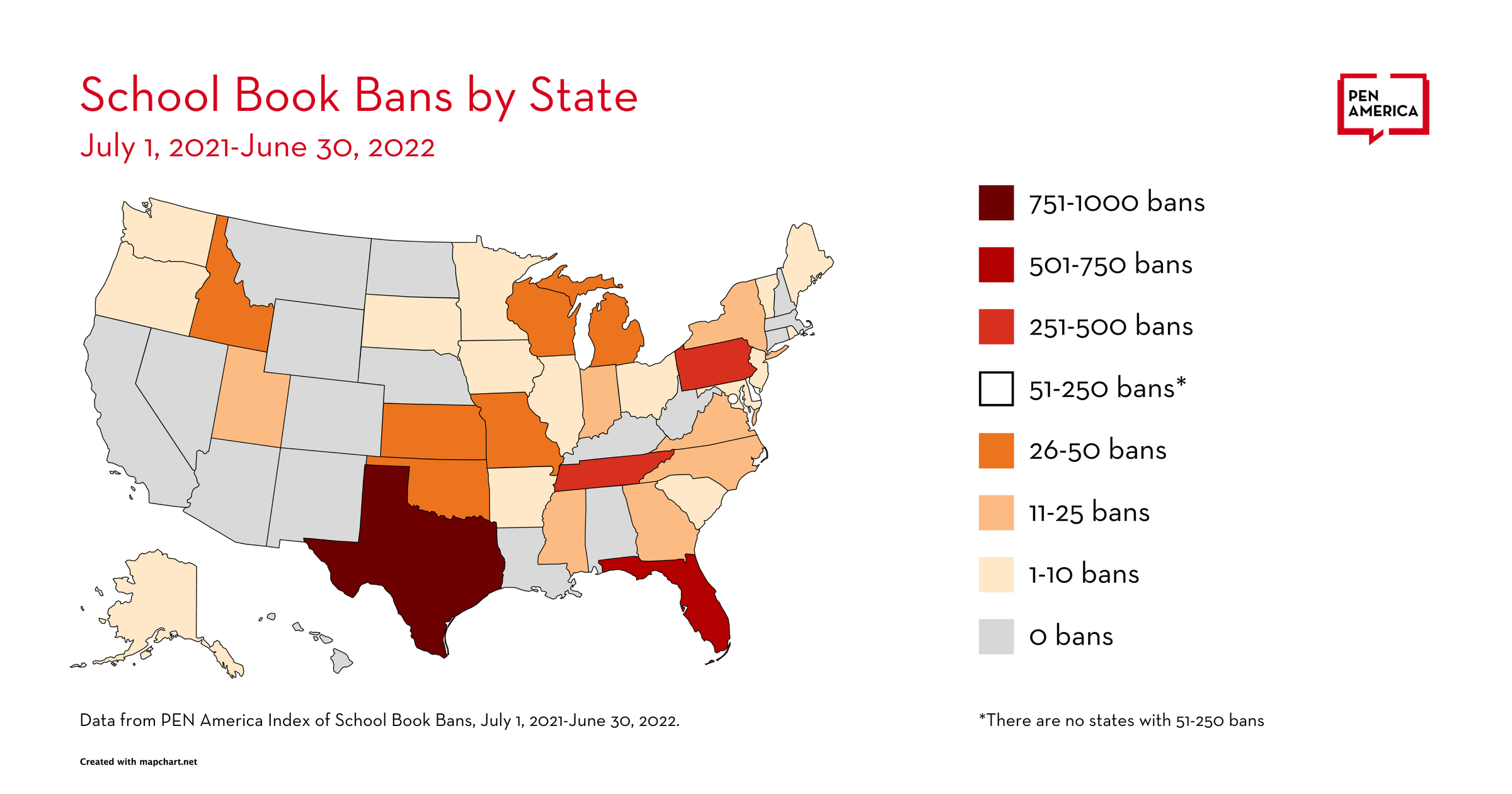
Book banning is not a regional issue — it's happening in 45 states. But certain states are driving disproportionate numbers of challenges, which is where advocacy efforts are most urgently needed right now.
Subjects banned
The pattern in what gets banned is not random. Books about LGBTQ+ identity, characters of color, and race make up the majority of challenges meaning censorship is targeting the most marginalized voices most aggressively.
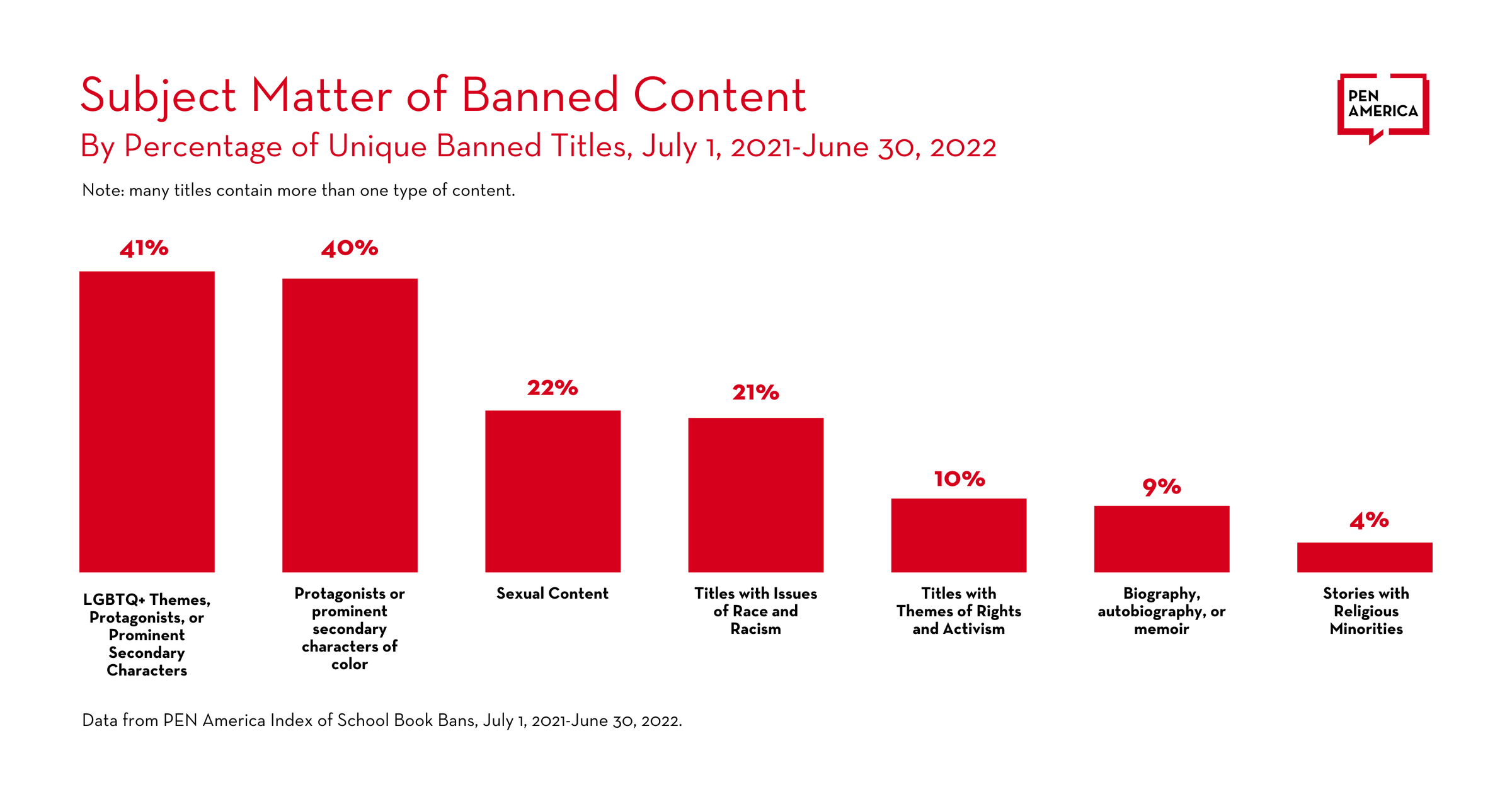
Among the 1,648 unique banned book titles in the Index:
674 banned book titles (41 percent) explicitly address LGBTQ+ themes or have protagonists or prominent secondary characters who are LGBTQ+ (this includes a specific subset of titles for transgender characters or stories—145 titles, or 9 percent);
659 banned book titles (40 percent) contain protagonists or prominent secondary characters of color;
338 banned book titles (21 percent) directly address issues of race and racism;
357 banned book titles (22 percent) contain sexual content of varying kinds, including novels with some level of description of sexual experiences of teenagers, stories about teen pregnancy, sexual assault and abortion as well as informational books about puberty, sex, or relationships;
161 banned book titles (10 percent) have themes related to rights and activism;
141 banned book titles (9 percent) are either biography, autobiography, or memoir;
64 banned book titles (4 percent) include characters and stories that reflect religious minorities, such as Jewish, Muslim and other faith traditions.
In the news
Supreme Court declines to hear Texas book ban appeal in case watched by free speech groups (AP News)
The Supreme Court Just Opened the Door to a New Era of Book Bans (TIME)
PEN America warns of rise in books 'systematically removed from school libraries' (PEN America)
SCOTUS: Parents can opt kids out of classes with LGBTQ book characters (npr)
Literacy Advocate Mychal Threets Reveals Why He Sees Book Bans as a 'Form of Evil' (People)
Pentagon’s attempt to ban books faces backlash from families (PBS) - video